

mortgage information
Where Does the Money Come From for Mortgage Loans?

n the olden days, when someone wanted a home loan they walked downtown to the neighborhood bank or savings & loan. If the bank had extra funds lying around and considered you a good credit risk, they would lend you the money from their own funds.
It doesn’t generally work like that anymore. Most of the money for home loans comes from three major institutions:
Fannie Mae (FNMA - Federal National Mortgage Association)
Freddie Mac (FHLMC - Federal Home Loan Mortgage Corporation)
Ginnie Mae (GNMA - Government National Mortgage Association)
There are exceptions.
Loans above $333,700 do not conform to Fannie Mae and Freddie Mac guidelines, which is why they are called non-conforming loans, or “jumbo” loans.
Where Does the Money Come From for Mortgage Loans?
n the olden days, when someone wanted a home loan they walked downtown to the neighborhood bank or savings & loan. If the bank had extra funds lying around and considered you a good credit risk, they would lend you the money from their own funds.
It doesn’t generally work like that anymore. Most of the money for home loans comes from three major institutions:
Fannie Mae (FNMA - Federal National Mortgage Association)
Freddie Mac (FHLMC - Federal Home Loan Mortgage Corporation)
Ginnie Mae (GNMA - Government National Mortgage Association)
There are exceptions.
Loans above $333,700 do not conform to Fannie Mae and Freddie Mac guidelines, which is why they are called non-conforming loans, or “jumbo” loans.
The Biweekly Mortgage - Who Needs It?

Have you received an advertisement offering to save you thousands of dollars on your thirty-year mortgage and cut years off your payments? With email spam becoming more pervasive as everyone tries to get rich quick on the Internet, these ads are popping up with troublesome regularity.
To achieve these wonderful savings all you have to do is allow half of your mortgage payment to be deducted from your checking account every two weeks. It’s easy. Of course, there is a small set-up fee and usually a transaction fee with every automatic deduction.
The Basics: Normally, you make twelve mortgage payments a year. Since there are fifty-two weeks in a year, a biweekly mortgage equals 26 half-payments a year. You save money. The ads are true.
How it Actually Works: You cannot simply mail in half a payment every two weeks to your mortgage lender. Since they do not accept partial payments for legal and accounting reasons, the mortgage company would just mail your half-payment back to you.
The Biweekly Mortgage - Who Needs It?
Have you received an advertisement offering to save you thousands of dollars on your thirty-year mortgage and cut years off your payments? With email spam becoming more pervasive as everyone tries to get rich quick on the Internet, these ads are popping up with troublesome regularity.
To achieve these wonderful savings all you have to do is allow half of your mortgage payment to be deducted from your checking account every two weeks. It’s easy. Of course, there is a small set-up fee and usually a transaction fee with every automatic deduction.
The Basics: Normally, you make twelve mortgage payments a year. Since there are fifty-two weeks in a year, a biweekly mortgage equals 26 half-payments a year. You save money. The ads are true.
How it Actually Works: You cannot simply mail in half a payment every two weeks to your mortgage lender. Since they do not accept partial payments for legal and accounting reasons, the mortgage company would just mail your half-payment back to you.
The Functions of an Escrow
01.
Exclamation points punctuate practically every claim:
No closing costs!
No refinancing!
No points!
No credit check!
No appraisal!
Save thousands!
Cut years off your mortgage!
02.
Potential Problems with the Trust Account
Because your funds are held in the trust account until your mortgage payment is due, there are potential dangers. Not only are your funds held in this account, but so are the funds of everyone else enrolled in the biweekly program. That is a lot of money.
Most likely, there will be no problems.
03.
Savings of the Biweekly Mortgage
By making principal reductions using the biweekly mortgage program, your mortgage will amortize more quickly, saving you money. How quickly your loan pays off depends on your interest rate and when you begin making the biweekly payments.
04.
No-Cost Alternatives to the Biweekly Mortgage
Instead of hiring a company to manage your biweekly payment, you could accomplish essentially the same thing on your own for free. Just take your monthly payment, divide it by twelve, and add that amount to your monthly mortgage payment. Be sure to earmark it as a principal reduction.
05.
Self-Discipline?
The biweekly mortgage companies claim that homeowners are not disciplined enough to follow through with principal reduction plans on their own. They suggest the reason for setting up the biweekly mortgage enforces discipline upon you, and by doing so, they save you money.
06.
Conclusion
The biweekly mortgage plans do not really do anything except move your money around and charge you for it. Plus, even though the danger is negligible, you must trust someone else to hold your money for you. If you can do the very same thing for free, plus save yourself even more money by doing it on your own, why pay someone else?
The Functions of an Escrow
01.
Exclamation points punctuate practically every claim:
No closing costs!
No refinancing!
No points!
No credit check!
No appraisal!
Save thousands!
Cut years off your mortgage!
02.
Potential Problems with the Trust Account
Because your funds are held in the trust account until your mortgage payment is due, there are potential dangers. Not only are your funds held in this account, but so are the funds of everyone else enrolled in the biweekly program. That is a lot of money.
Most likely, there will be no problems.
03.
Savings of the Biweekly Mortgage
By making principal reductions using the biweekly mortgage program, your mortgage will amortize more quickly, saving you money. How quickly your loan pays off depends on your interest rate and when you begin making the biweekly payments.
04.
No-Cost Alternatives to the Biweekly Mortgage
Instead of hiring a company to manage your biweekly payment, you could accomplish essentially the same thing on your own for free. Just take your monthly payment, divide it by twelve, and add that amount to your monthly mortgage payment. Be sure to earmark it as a principal reduction.
05.
Self-Discipline?
The biweekly mortgage companies claim that homeowners are not disciplined enough to follow through with principal reduction plans on their own. They suggest the reason for setting up the biweekly mortgage enforces discipline upon you, and by doing so, they save you money.
06.
Conclusion
The biweekly mortgage plans do not really do anything except move your money around and charge you for it. Plus, even though the danger is negligible, you must trust someone else to hold your money for you. If you can do the very same thing for free, plus save yourself even more money by doing it on your own, why pay someone else?
Land Contract
An alternative to a non-conforming loan is the use of a land contract, which is allowed in some states. A land contract is an agreement between a buyer and a seller, where the buyer agrees to make periodic payments to the seller. The title to the property only transfers to the land contract buyer on fulfillment of the land contract obligations.
A land contract can be helpful for those who need time to establish or improve their credit rating. There are only small closing costs, and payment can help establish a good mortgage payment record. This can help establish an overall good credit rating, and it is possible for the buyer to later refinance the land contract with a conforming loan.
On the other hand, there are risks associated with land contracts. Land contract purchases are not necessarily recorded in the public record

Land Contract
An alternative to a non-conforming loan is the use of a land contract, which is allowed in some states. A land contract is an agreement between a buyer and a seller, where the buyer agrees to make periodic payments to the seller. The title to the property only transfers to the land contract buyer on fulfillment of the land contract obligations.
A land contract can be helpful for those who need time to establish or improve their credit rating. There are only small closing costs, and payment can help establish a good mortgage payment record. This can help establish an overall good credit rating, and it is possible for the buyer to later refinance the land contract with a conforming loan.
On the other hand, there are risks associated with land contracts. Land contract purchases are not necessarily recorded in the public record
The No-Cost Thirty Year Fixed Rate Mortgage

There really is no such thing as a no-cost mortgage loan. There are always costs, such as appraisal fees, escrow fees, title insurance fees, document fees, processing fees, flood certification fees, recording fees, notary fees, tax service fees, wire fees, and so on, depending on whether the loan is a purchase or a refinance. The term “no-cost” actually means that your lender is paying the costs of the loan. All a no-cost loan means is that there is no cost to you, the borrower.
Except that you pay a higher interest rate.
Understand How Loans Are Priced A variation of the no-cost loan is the “no points” loan, or even the “no points, no lender fees” loan. On these loans you pay all the costs associated with buying a house or refinancing, but you do not have to pay the lender associated fees or points. However, since lenders and loan officers do not do anything for free, the profit has to come from somewhere. First, you have to understand how loans are priced and how mortgage lenders and loan officers earn income.
The No-Cost Thirty Year Fixed Rate Mortgage
There really is no such thing as a no-cost mortgage loan. There are always costs, such as appraisal fees, escrow fees, title insurance fees, document fees, processing fees, flood certification fees, recording fees, notary fees, tax service fees, wire fees, and so on, depending on whether the loan is a purchase or a refinance. The term “no-cost” actually means that your lender is paying the costs of the loan. All a no-cost loan means is that there is no cost to you, the borrower.
Except that you pay a higher interest rate.
Understand How Loans Are Priced A variation of the no-cost loan is the “no points” loan, or even the “no points, no lender fees” loan. On these loans you pay all the costs associated with buying a house or refinancing, but you do not have to pay the lender associated fees or points. However, since lenders and loan officers do not do anything for free, the profit has to come from somewhere. First, you have to understand how loans are priced and how mortgage lenders and loan officers earn income.
01.
Understand How Loans Are Priced
Rate - Cost (points)
6.250% - 2.000
6.375% - 1.500
6.500% - 1.000
6.625% - 0.500
6.750% - 0.000
6.875% - (0.500)
7.000% - (1.000)
7.125% - (1.500)
7.250% - (2.000)
02.
Zero Cost Loans
How Mortgage Companies and Loan Officers Make Money
The above rate sheet is not a rate sheet designed for public review. In fact, most lenders have a policy that the public cannot see their internal rate sheet. This rate sheet is designed for loan officers and the cost column is the loan officer’s cost, not the cost to the borrower.
03.
Does it make sense to do a zero cost loan?
On a $200,000 thirty year fixed rate loan, the difference in monthly mortgage payments will be about $87, using the example rate sheet on the first page. Over thirty years, it works out that you will pay more than $30,000 extra for getting a zero cost loan. So if you intend to remain in the home for a long period of time it just doesn’t make sense.
04.
Exceptions:
On a FHA Streamline Refinance Without an Appraisal (not a purchase - which is what the article talks about), it makes sense to do a zero cost loan.
If the homebuyer only has enough money for a down payment and none to cover closing costs, PLUS no arrangement can be made for the seller to pay closing costs, then zero cost may make sense. (However, I would still recommend negotiating terms with the selle.
Which ARM is the Best Alternative?
How would you like a mortgage loan where you did not have to make the whole payment if you did not want to? Or would you like a loan with an interest rate about 1% below a thirty-year fixed rate mortgage and pay zero points? Or a loan where you did not have to document your income, savings history, or source of down payment? How would you like a mortgage payment of only 1.95%? You can have all that with the 11th District Cost of Funds (COFI) Adjustable Rate Mortgage.
Sound too good to be true? Sound like a bunch of hype?
Each statement above is true. However, it is also only part of the story and loan officers do not always tell you the whole story when promoting this loan. Other loan officers may try to scare you away from adjustable rate mortgages. However, once you become aware of all the details of the loan, it is an excellent way to buy the house of your dreams, especially when fixed rates begin to go up.

Which ARM is the Best Alternative?
How would you like a mortgage loan where you did not have to make the whole payment if you did not want to? Or would you like a loan with an interest rate about 1% below a thirty-year fixed rate mortgage and pay zero points? Or a loan where you did not have to document your income, savings history, or source of down payment? How would you like a mortgage payment of only 1.95%? You can have all that with the 11th District Cost of Funds (COFI) Adjustable Rate Mortgage.
Sound too good to be true? Sound like a bunch of hype?
Each statement above is true. However, it is also only part of the story and loan officers do not always tell you the whole story when promoting this loan. Other loan officers may try to scare you away from adjustable rate mortgages. However, once you become aware of all the details of the loan, it is an excellent way to buy the house of your dreams, especially when fixed rates begin to go up.
01.
ARMs in General
Adjustable rate mortgages all have certain similar features. They have an adjustment period, an index, a margin, and a rate cap. The adjustment period is simply how often the rate changes. Some change monthly, some change every six months, and some only adjust once a year.
02.
Indexes and the 11th District
The “Prime Rate” you hear about in the news is one interest rate index, although it is very rare that mortgages are tied to this index. It is more common to find adjustable rate mortgages tied to different treasury bill indexes, the average interest rate paid on certificates of deposit, the London Inter-Bank Offered Rate (LIBOR), or the 11th District Cost of Funds.
03.
COFI ARM Index
The 11th District Cost of Funds (COFI) is the weighted average of interest rates paid out on savings deposits by banking institutions in the 11th district of the Federal Home Loan Bank (FHLB), which is located in San Francisco. The 11th District includes the states of California, Nevada, and Arizona.
04.
The Margin and Interest Rates
The margin on the COFI ARM typically ranges between 2.25-3%.
Monthly Adjustments Sound Scary, but...
Although you can get a COFI ARM with an adjustable period of six months, you can get a lower margin if you go for the monthly adjustment period.
05.
Make Only Part of Your Payment?
This is the really interesting feature of the loan. You do not have to make the whole payment. Each month you get a bill that has at least three payment options. One choice is the full payment at the current interest rate.
06.
Deferred Interest and Amortization
Of course, if you only make the minimum payment each month, you are not paying all of the interest that is currently due that month. You are deferring some of the interest that is currently due on the loan so you will have to pay it later.
The lender keeps track of this deferred interest by adding it to the loan and the loan balance gets larger.
07.
stated Income and Other Features
Many COFI lenders allow Homebuyers with good credit to apply without documenting their income, assets, or source of down payment. Of course, you have to make a twenty or twenty-five percent down payment on your home purchase.
03.
Sub-Prime COFI ARMs
Some people have less than perfect credit and they are used to being charged outrageous rates for past problems. Some COFI lenders offer this same loan but have a slightly higher starting payment and a higher margin. The end result is that your interest rate would be about one percent higher.
04.
Who Should Get This Loan?
Most people who get the COFI ARM are purchasing a home between $300,000 and $650,000, but it is not limited to that.
Conclusion
So, when rates start going up this is an attractive alternative to a fixed rate mortgage. It even makes sense for some borrowers when rates are low.
05.
Skipping the Starter Home or Move-Up Home
If you’re buying a home with the intention of living in it for only a few years before you move up to a bigger home, the COFI ARM makes sense, too. With this loan and its low start payment you can often qualify for a larger home than you can when applying for a fixed rate loan.
The Advantages of Different Types of Mortgage Lenders
If you ask a loan officer, “What kind of lender is best?” the answer will be whatever kind of company he works for and he will give you a list of reasons why. If you meet the same loan officer years later, and he works for a different kind of lender, he will give you a list of reasons why that type of lender is better.
REALTORS® will also have differing opinions, and those opinions have and will continue to change over time. In the past, it seemed like most would recommend portfolio lenders. Now, they usually recommend mortgage bankers and mortgage brokers. Most often they direct you to a specific loan officer who has demonstrated a track record of service and reliability.
This article discusses the advantages and disadvantage of different types of institutions, not the individual loan officers. However, it is often more important to choose the correct loan officer, not the institution.

The Advantages of Different Types of Mortgage Lenders
If you ask a loan officer, “What kind of lender is best?” the answer will be whatever kind of company he works for and he will give you a list of reasons why. If you meet the same loan officer years later, and he works for a different kind of lender, he will give you a list of reasons why that type of lender is better.
REALTORS® will also have differing opinions, and those opinions have and will continue to change over time. In the past, it seemed like most would recommend portfolio lenders. Now, they usually recommend mortgage bankers and mortgage brokers. Most often they direct you to a specific loan officer who has demonstrated a track record of service and reliability.
This article discusses the advantages and disadvantage of different types of institutions, not the individual loan officers. However, it is often more important to choose the correct loan officer, not the institution.
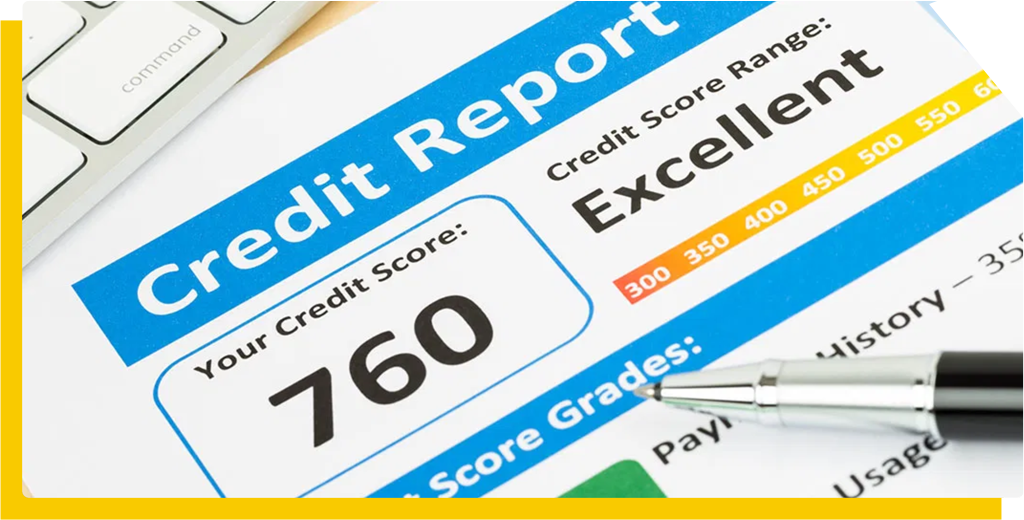
WHAT'S A FICO®?
If you ask a loan officer, “What kind of lender is best?” the answer will be whatever kind of company he works for and he will give you a list of reasons why. If you meet the same loan officer years later, and he works for a different kind of lender, he will give you a list of reasons why that type of lender is better.
REALTORS® will also have differing opinions, and those opinions have and will continue to change over time. In the past, it seemed like most would recommend portfolio lenders. Now, they usually recommend mortgage bankers and mortgage brokers. Most often they direct you to a specific loan officer who has demonstrated a track record of service and reliability.
This article discusses the advantages and disadvantage of different types of institutions, not the individual loan officers. However, it is often more important to choose the correct loan officer, not the institution.
Types of Mortgage Lenders
Mortgage Bankers: Mortgage Bankers are lenders that are large enough to originate loans and create pools of loans, which are then sold directly to Fannie Mae, Freddie Mac, Ginnie Mae, jumbo loan investors, and others.
Portfolio Lenders: An institution that lends their own money and originates loans for itself is called a portfolio lender.
Direct Lenders: Lenders are considered to be direct lenders if they fund their own loans. A direct lender can range anywhere from the biggest lender to a very tiny one.
Correspondents: Correspondent is usually a term that refers to a company that originates and closes home loans in their own name, then sells them individually to a larger lender, called a sponsor.
Mortgage Brokers: Mortgage Brokers are companies that originate loans with the intention of brokering them to lending institutions.
Wholesale Lenders: Most mortgage bankers and portfolio lenders also act as wholesale lenders, catering to mortgage brokers for loan origination.

Adjustable Rate Mortgages - The Basics
An adjustable rate mortgage (ARM) has an interest rate that fluctuates periodically. This is in contrast to a fixed rate mortgage, which always has the same interest rate. Every ARM has basic components: An index, A margin, Adjustment Period, An interest rate cap, An initial interest rate
The Index: An ARM’s interest rate is tied to one of many economic indices, some examples of which are the 1-year constant maturity Treasury security
The Margin: The interest rate for your ARM will be calculated by adding a margin to the interest rate from the index.
The Adjustment Period: The Adjustment Period controls when and how often your interest rate changes.
The Interest Rate Cap: Interest rate caps are built into the loan to protect the borrower from drastic interest rate fluctuations.
The Initial Interest Rate: The Initial Interest Rate is the interest rate that you start with at the beginning of your loan period.
Adjustable Rate Mortgages - The PROS & CONS
Now that you know what an ARM is and how it works, you may be wondering what the advantages and disadvantages are. So let’s explore that issue.
Offering adjustable rates allows lenders to transfer part of the interest rate risk from themselves to the borrower. If you get a fixed rate mortgage and the interest rate then goes up, it costs the lender money. However, if you have an adjustable rate mortgage, as the interest rate goes up, so does your payment, thus compensating the lender.
Adjustable rate mortgages are particularly useful when unpredictable interest rates make fixed rate loans hard to get. One of the main advantages of an adjustable rate mortgage is that the initial interest rate is lower than that of a fixed rate mortgage. A lower rate means lower payments, which may help you qualify for a larger loan. This is an important detail if you expect your future earnings to rise. In this case, the ARM will allow you to qualify for a larger loan amount earlier rather than later.
Closing Costs When Buying or Refinancing a Home

This is a detailed summary of costs you may have to pay when you buy or refinance your home. They are listed in the order that they should appear on a Good Faith Estimate you obtain from a mortgage lender. There are two broad categories of closing costs.
Non-recurring closing costs are items that are paid once and you never pay again. Recurring closing costs are items you pay time and again over the course of home ownership, such as property taxes and homeowner’s insurance. Some of the items that appear here do not traditionally appear on a lender’s Good Faith Estimate and lenders are not required to show all of these items.
01.
Non-Recurring Closing Costs Associated with the Lender.
Loan Origination Fee
Loan Discount
Appraisal Fee
Credit Report
Lender’s Inspection Fee
Mortgage Broker Fee
Tax Service Fee
Flood Certification Fe
Flood Monitoring
02.
Other Lender Fees
Document Preparation
Underwriting Fee
Administration Fee
Appraisal Review Fee
Warehousing Fee
03.
Reserves Deposited with Lender
Homeowners Insurance Impounds
Property Tax Impounds
Mortgage Insurance Impounds
04.
Non-Recurring Closing Costs not associated with the Lender
Closing/Escrow/Settlement Fee
Title Insurance
Notary Fees
Recording Fees
Pest Inspection
Home Inspection
Home Warranty
05.
Refinancing Associated Costs (but not charged by the new Lender)
Interest
Reconveyance Fee
Demand Fee
Sub-Escrow fee
Loan Tie-in Fee
Homeowner’s Association Transfer Fee
06.
Asking the Seller to Pay Closing Costs - Rules and Advice.
It has become common to ask the seller to pay some or all of the closing costs when you purchase a home
Keep in mind a few simple rules. On conventional loans you can only ask the seller to pay non-recurring costs, not prepaid fees or items to be paid in advance.
Documenting Your Assets - Verifying Your Down Payment
When buying a home, it is not enough to just come up with the money. With the exception of no asset verification loans, lenders want to verify where the money for your new home will be coming from. If you can document that the funds are coming from your personal savings, the lender is more confident of your strength as a borrower.
Checking, Savings, & Money Market Accounts
Stocks, Bonds, Mutual Funds, etc.
Gifts:
401K or Retirement Accounts
Employers
Savings Bonds
Personal Property - Cars, Antiques, etc.
Selling Personal Property

FICO® Score - a Brief Explanation
When you apply for a mortgage loan, you expect your lender to pull a credit report and look at whether you’ve made your payments on time. What you may not expect is that they seem to be more interested in your FICO® score.
Some of the things that affect your FICO score are:
Delinquencies, Too many accounts opened within the last twelve months, Short credit history, Balances on revolving credit are near the maximum limits, Public records, such as tax liens, judgments, or bankruptcies, No recent credit card balances, Too many recent credit inquiries, Too few revolving accounts, Too many revolving accounts
FICO® actually stands for Fair Isaac and Company, which is the company used by the Experian (formerly TRW) credit bureau to calculate credit scores. Trans-Union and Equifax are two other credit bureaus who also provide credit scores.
FICO® Score - a Brief Explanation
Years ago, credit scoring had little to do with mortgage lending. When reviewing the credit worthiness of a borrower, an underwriter would make a subjective decision based on past payment history. Then things changed. Lenders studied the relationship between credit scores and mortgage delinquencies. There was a definite relationship. Almost half of those borrowers with FICO® scores below 550 became ninety days delinquent at least once during their mortgage. On the other hand, only two out of every 10,000 borrowers with FICO® scores above eight hundred became delinquent.
FICO® Score - a Brief Explanation
Years ago, credit scoring had little to do with mortgage lending. When reviewing the credit worthiness of a borrower, an underwriter would make a subjective decision based on past payment history. Then things changed. Lenders studied the relationship between credit scores and mortgage delinquencies. There was a definite relationship. Almost half of those borrowers with FICO® scores below 550 became ninety days delinquent at least once during their mortgage. On the other hand, only two out of every 10,000 borrowers with FICO® scores above eight hundred became delinquent.
Items You Need When Applying For a Loan
Have These Items Ready When You Apply For a Loan, It used to be that lenders mailed out verifications to employers, banks, mortgage companies, and so on, in order to verify the data supplied by borrowers. Nowadays, the interest is often in speed and getting answers quickly so alternate documentation has become more widely used.
Alternate documentation means that underwriting answers can be obtained with information supplied directly from the borrower instead of waiting around for verifications to come back in the mail. The following is required for most standardized loans as part of alternate documentation processing. Items may differ according to whether your loan is a conforming (Fannie Mae or Freddie Mac), non-conforming (jumbo) loan, government loan, or a portfolio loan.
Verifications are still mailed out, but usually as part of quality control procedures.

Items You Need When Applying For a Loan
Have These Items Ready When You Apply For a Loan, It used to be that lenders mailed out verifications to employers, banks, mortgage companies, and so on, in order to verify the data supplied by borrowers. Nowadays, the interest is often in speed and getting answers quickly so alternate documentation has become more widely used.
Alternate documentation means that underwriting answers can be obtained with information supplied directly from the borrower instead of waiting around for verifications to come back in the mail. The following is required for most standardized loans as part of alternate documentation processing. Items may differ according to whether your loan is a conforming (Fannie Mae or Freddie Mac), non-conforming (jumbo) loan, government loan, or a portfolio loan.
Verifications are still mailed out, but usually as part of quality control procedures.
01.
Income Items
W2 forms for the last two years
Pay stubs covering a 30 day period
Federal tax returns (1040s) for the last two years, if:
you are self-employed
earn more than 25% of your income from commissions or bonuses
own rental property
or are in a career where you are likely to take non-reimbursed business expenses
Year-to-Date Profit and Loss Statement (for self employed)
Corporate or partnership tax returns (if applicable)
Pension Award letter (for retired individuals)
Social Security Award letters (for those on Social Security)
02.
Asset Items
Bank statements for previous two months (sometimes three) on all accounts. All pages.
Statements for two months on all stocks, mutual funds, bonds, etc.
Fee
Copy of most recent 401K statement (or other retirement assets)
Explanations for any large deposits and source of those funds
Copy of HUD1 Settlement Statement on recent sales of homes
Copy of Estimated HUD1 Settlement Statement if a previous home is for sale, but not yet closed
Gift letter (if some of the funds come as a gift from a family member)
04.
Credit Items
Landlord’s name, address, and phone number (for verification of rental)
Explanations for any of the following items that may appear on your credit report:
Late payments
Credit inquiries in the last 90 days
Charge-offs
Collections
Judgments
Liens
Copy of bankruptcy papers if you have filed bankruptcy within the last seven years
05.
Other
Copy of purchase agreement (if you have already made an offer)
To document receipt of child support (if you desire to show it as income)
Copy of Divorce Settlement (to show the amount)
Copies of twelve months canceled checks to document actual receipt of fund
FHA Loans
Copy of Social Security Card (or other documentation of social security number)
Copy of Driver’s license
06.
VA Loans
Copy of DD214
Keep in mind a few simple rules. On conventional loans you can only ask the seller to pay non-recurring costs, not prepaid fees or items to be paid in advance.
Refinances
Copy of Note on existing loan
Copy of HUD1 Settlement Statement on existing loan
Name, address, phone number, loan number of existing loan/lender
Your Savings and Down Payment
Your First Step Toward Buying a Home: When preparing to buy a home, the first thing many homebuyers do is look at the real estate ads in newspapers, magazines and listings on the Internet. Some potential buyers read how-to articles like this one.
Mortgage Programs: If you only have enough available for a minimum down payment, your choices of loan program will be limited to only a few types of mortgages.
Shopping for Rates: A very important reason you need to have at least some idea of your down payment is for shopping for interest rates.
Writing Your Offer: Another reason you need to have a clue about your down payment is because it affects how you write your offer to purchase a home.
Conclusion: As you can see, the down payment affects every choice you make when you buy a home

Your Savings and Down Payment
Your First Step Toward Buying a Home: When preparing to buy a home, the first thing many homebuyers do is look at the real estate ads in newspapers, magazines and listings on the Internet. Some potential buyers read how-to articles like this one.
Mortgage Programs: If you only have enough available for a minimum down payment, your choices of loan program will be limited to only a few types of mortgages.
Shopping for Rates: A very important reason you need to have at least some idea of your down payment is for shopping for interest rates.
Writing Your Offer: Another reason you need to have a clue about your down payment is because it affects how you write your offer to purchase a home.
Conclusion: As you can see, the down payment affects every choice you make when you buy a home
– Call the Local Experts.
Your Next Move
Starts Here
Reach out now for trusted, veteran-led real estate services in New Braunfels.

WEICHERT, REALTORS® – Corwin & Associates
133 N. Seguin Avenue New Braunfels, TX 78130 Across from Courthouse, Downtown New Braunfels 830-632-5725
Connect With Us
©2025, Listings courtesy of Austin Board of REALTORS® as distributed by MLS GRID. All rights reserved.
The information at this site is provided solely for informational purposes and does not constitute an offer to sell, rent, or advertise real estate outside the state in which the owner of the site is licensed. The owner is not making any warranties or representation concerning any of these properties including their availability. Information at this site is deemed reliable but not guaranteed and should be independently verified. The information being provided is for consumers' personal, non-commercial use and may not be used for any purpose other than to identify perspective properties consumers may be interested in purchasing. This site will be monitored for 'scraping' and any use of search facilities of data on the site other than by potential buyers/sellers is prohibited. Based on information submitted to the MLS GRID as of 2025-05-19 06:30:15. All data is obtained from various sources and may not have been verified by broker or MLS GRID. Supplied Open House Information is subject to change without notice. All information should be independently reviewed and verified for accuracy. Properties may or may not be listed by the office/agent presenting the information.
Terms of Usage Agreement
Information last updated on 2025-05-19 06:30:15.
©2025, Central Texas MLS. All rights reserved.
Information deemed to be reliable but not guaranteed. The data relating to real estate for sale on this website comes from Central Texas Multiple Listing Service and the Broker Reciprocity Program.sm. Real estate listings held by brokerage firms other than WEICHERT, REALTORS® - Corwin & Associates are marked with the BR logo and detailed information about them includes the name of the listing brokers. Listing broker has attempted to offer accurate data, but buyers are advised to confirm all items.
Information last updated on 2025-05-19 06:30:15
©2025, San Antonio Board of REALTORS®. All rights reserved.
Information deemed to be reliable but not guaranteed. The data relating to real estate for sale on this website comes in part from the Broker Reciprocitysm Program. Real estate listings held by brokerage firms other than WEICHERT, REALTORS® - Corwin & Associates are marked with the BR logo and detailed information about them includes the name of the listing brokers. Listing broker has attempted to offer accurate data, but buyers are advised to confirm all items. IDX information is provided exclusively for consumers’ personal, non-commercial use, that it may not be used for any purpose other than to identify prospective properties consumers may be interested in purchasing, and that the data is deemed reliable but is not guaranteed accurate by the MLS. The MLS may, at its discretion, require use of other disclaimers as necessary to protect participants and/or the MLS from liability
Information last updated on 2025-05-19 06:30:16.
Facebook
X
LinkedIn
Youtube